
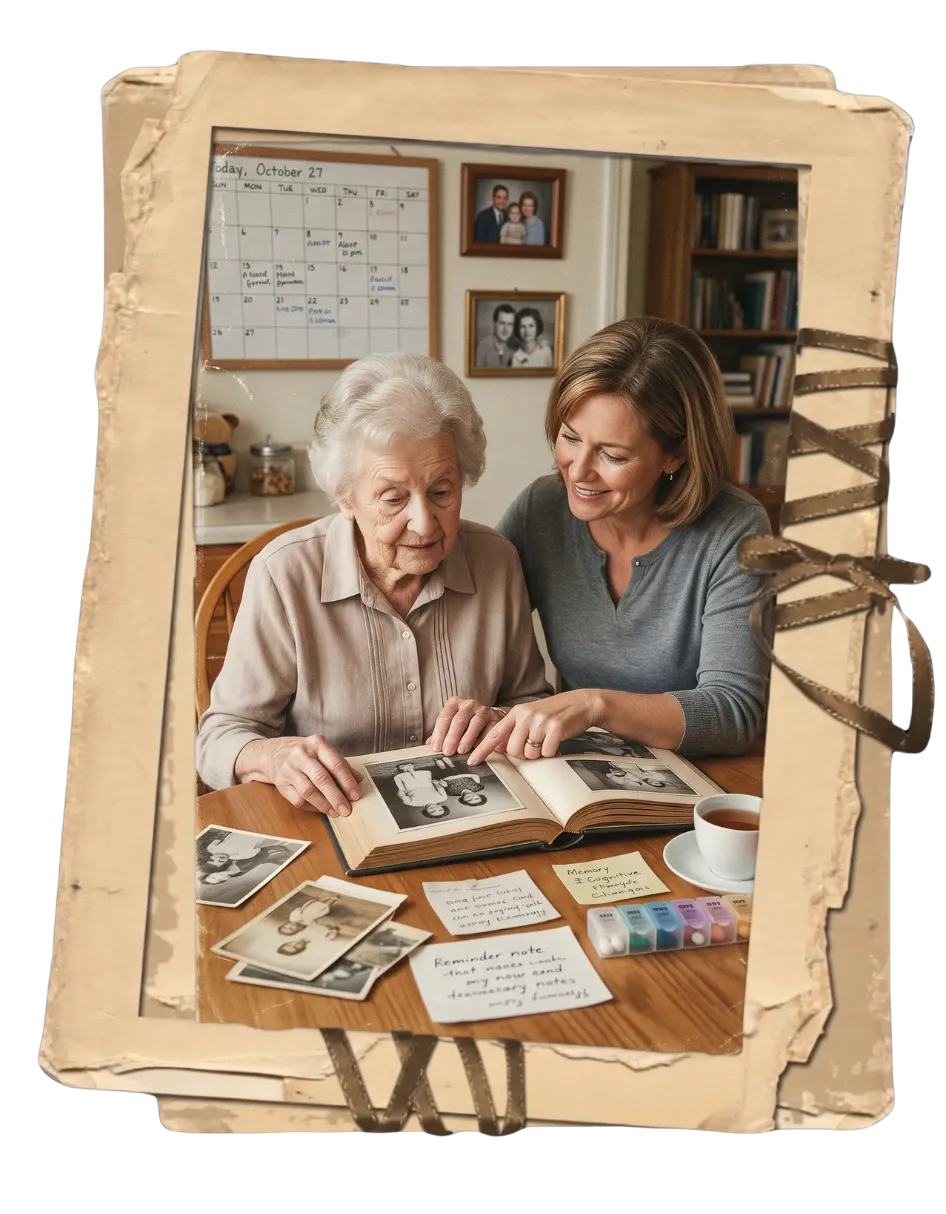
No. Dementia is a general term for a decline in memory and thinking that affects daily life. Alzheimer’s disease is one cause of dementia, and it is the most common one.
Think of dementia as the name for a group of symptoms. Alzheimer’s is one disease that can cause them. Other causes include vascular disease, Lewy body disease and frontotemporal degeneration. Some people have more than one type at once, which is called mixed dementia.
Knowing the cause can help the doctor plan care and help your family plan ahead. If your parent’s memory is changing, ask for a full checkup. Learn how dementia is diagnosed, or read our guide to the stages of dementia at home.
There is no single test for dementia. A doctor looks at medical history, does a physical exam and memory tests, and may order lab work or brain scans. Input from family also helps.
Part of the visit is ruling out other problems that look like dementia. Depression, sleep apnea and delirium can cause similar symptoms, and many of these can be treated.
Before the visit, write down what you have noticed and when it began. Note falls, mood shifts, missed bills or trouble with daily tasks. Bring a list of all medicines. The doctor may ask a family member to describe changes, so plan to go along if your parent agrees.
The doctor may also suggest a specialist for more detailed memory tests. Our guide to the stages of dementia explains what may come next.
In most cases, dementia is not passed straight from parent to child. Having a parent with Alzheimer’s can raise your risk, but it does not mean you will get it.
Some genes raise the odds without deciding the outcome. A common one is called APOE-e4. Even people with two copies are not certain to get Alzheimer’s. Genes that directly cause the disease are rare.
If you are thinking about genetic testing, meet with a genetic counselor before the test and again when results come back. They can explain what the results mean and help you plan.
Share your family history with your own doctor at your next visit. To learn the basics, read our answer on the difference between Alzheimer’s and dementia.
Some forgetfulness is a normal part of aging, like misplacing glasses now and then. Memory changes that disrupt daily life are not normal and should be checked by a doctor.
Not every memory problem is dementia. Medicine side effects, low vitamin B12, thyroid problems and depression can cause them too. These often get better once treated.
Offer to make the appointment and go with your parent. Bring notes on what you have seen. You can learn more in our memory and thinking changes section.
Sundowning is when a person with dementia becomes more restless, confused or upset in the late afternoon or early evening. It often starts as daylight fades.
Simple routines can help ease the evening:
– Keep the same daily schedule for meals, bathing and bedtime.
– Get some sunlight each day, outdoors or by a window.
– Plan some activity during the day, but not too much.
– Skip coffee, cola and alcohol late in the day.
– Limit long naps in the afternoon.
Being overtired, noise or too many people can make it worse. So can pain or some medicines. If the behavior gets worse, talk with your parent’s doctor to check for a physical cause. For more support, visit our Memory & Cognitive Changes topic.
Memory care is designed for people with dementia, while assisted living is for people who need help with daily tasks but not nursing home care. Assisted living usually includes housing, meals and help with personal care.
Memory care is often a separate unit inside a larger building, and some units are secured. Not all assisted living places offer dementia care, so ask what they provide. Find out if staff are trained in dementia care and how they handle changes in behavior.
Medicare does not pay for assisted living or other long-term custodial care. Medicaid may cover some costs, depending on your parent’s state and eligibility.
Staying home can also work with support such as adult day programs, in-home help and breaks for you. Our Find Care overview explains each type of care. For what to expect over time, read about the stages of dementia.
GUIDES AND CHECKLISTS
New resources on this are on the way. Try another topic.


ASK CASA
Tell us what is going on. A member of the CASA team will reply by phone or email with guidance that fits your family.
Practical guidance to help you spot changes earlier, ask better questions, and make more informed decisions as your loved one ages at home.
WE'RE HERE TO HELP
Ask us anything about your parent. A member of the CASA team will reply with guidance that fits.
BEFORE YOU GO
Send us your question and we will point you to the right next step.
ASK CASA
Tell us what is going on. A member of the CASA team will reply by phone or email with guidance that fits your situation.